



The BSG Conference
The British Society for Geomorphology hosts an annual conference each year, where we explore all facets of geomorphology through talks from members across the society. This ranges from academic research to applied geomorphology case studies and learning. A conference dinner is held with an Awards ceremony. The conference has long provided a platform for early career researchers to share their work in a collegial and supportive environment, and we particularly welcome contributions from early career researchers and practitioners. The oral and poster presentation sessions provide an excellent opportunity to share your latest research and practice, while the early career researcher and professional geomorphology workshops will offer a great chance to develop technical and transferable skills alongside new or familiar peers.
2026 BSG Annual Conference
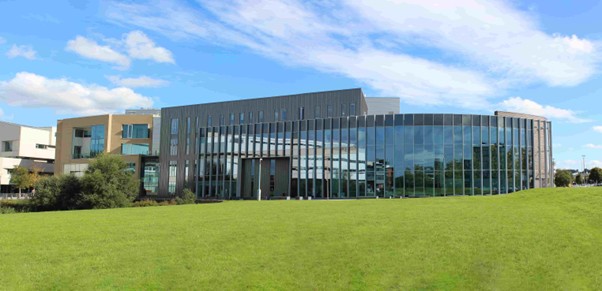
This year the British Society for Geomorphology (BSG) Annual Conference, incorporating the 4th Cuchlaine King Symposium, will be hosted by University of Lincoln, and specifically the Department of Geography and the Climate, Catchments, Coasts and Communities Research Group.
Conference dates: Tuesday 1st to Friday 4th September 2026 inclusive.
The BSG Annual Conference is the most important event in the BSG calendar, bringing together geomorphology researchers and professionals to share their work and network with peers.
The oral and poster presentation sessions provide an excellent opportunity to share your latest research and practice, while the early career researcher and professional geomorphology workshops will offer a great chance to develop technical and transferable skills alongside new or familiar peers.
The conference will also host a field visit to observe the diverse geomorphology and approaches to managing the Lincolnshire coast.
We will celebrate the BSG Medal and Award winners through keynote presentations, and look forward to hosting the fourth Cuchlaine King Symposium.
The BSG Annual Conference has long provided a platform for early career researchers to share their work in a collegial and supportive environment, and we welcome contributions from all career stages and from practitioners and academics alike.
Event Information
Meet the team behind Lincoln 2026
- Dr Catherine Sanders
- Dr Luca Mao
- Dr Bartholemew Hill
- Dr Giacomo Pellegrini
- Dr Josephine Westlake
Conference Contact: csanders@lincoln.ac.uk
Abstract submission is now open!
Abstracts can be submitted for oral and poster sessions for in-person delegates, and recorded oral and digital poster submissions can be submitted for online delegates.
Abstract submission is available here.
The abstract submission deadline is Friday 24th July. You will be notified on the outcome of your abstract prior to the Early-Bird registration deadline.
Posters can be printed at the University of Lincoln for a cost of £15, which can be ordered via the conference online shop (link to follow). Abstracts can be submitted to the main conference, or to be aligned with the Cuchlaine King Symposium.
Registration
Registration for the Annual Conference is now open. Early-Bird reduced registration rates are available until 31st July 2026. Registration is available for both in-person and online only attendance. In-person registration includes:
- Wednesday 2 September: Welcome refreshments, lunch, afternoon refreshments, and evening refreshments.
- Thursday 3 September: Welcome refreshments, morning refreshments, lunch, and afternoon refreshments.
- Friday 4 September: Welcome refreshments, morning refreshments, and lunch.
In-person registration costs are below, and the online registration cost is £50. Registration payment is via the conference online shop which can be found here. Member Concession rates are available for student members, springboard members, retired members, and unwaged members.

Conference Dinner
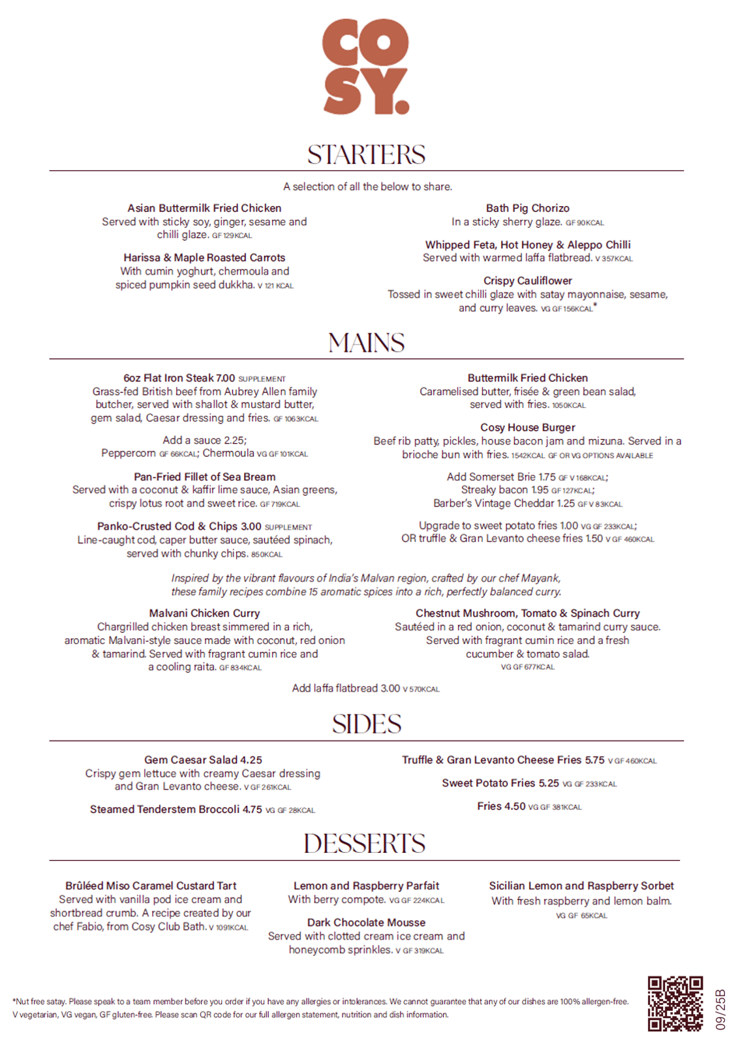
The conference dinner will take place a The Cosy Club in Lincoln’s Cornhill Quarter, from 18:00 to close on Thursday 3rd September. The dinner includes a Prosecco Reception and a three-course meal, and will include the citations and presentations of the Society’s annual awards.
The cost of the dinner is £43, payable via the conference online shop as an optional extra with registration. Below is an indicative menu (subject to change). Menu choices do not need to be submitted in advance, but you can notify us of dietary requirements via the questionnaire when booking in the conference online shop.
Please note there is a limit on the number of Conference Dinner spaces available, so booking early is recommended. Book alongside registration here.
Venue
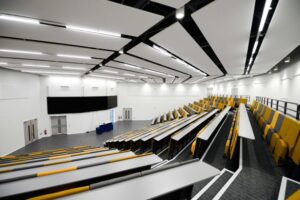
The main conference venue will be the Isaac Newton Building on the University of Lincoln Brayford Campus, a ten-minute walk from Lincoln train station and Lincoln bus station. Conference sessions will take place in the main lecture theatre, with posters and refreshments in the accompanying atrium.
Directions from the train and bus station can be found here.
Accommodation
On-site accommodation opposite the conference venue can be booked via the University accommodation website at a cost of £60 per night. Please quote the British Society for Geomorphology conference when booking.
Booking link here.
Alternative options in Lincoln are numerous, varied, and available to suit all budgets.

Gibraltar Point National Nature Reserve
The conference field trip on Tuesday 1 September will visit Gibraltar Point National Nature Reserve. Gibraltar Point is on the southern tip of coastal Lincolnshire, and showcases dynamic spit and barrier systems, sand dunes and dune slacks, saltmarsh and mudflats, and bird and botanic diversity. The field trip will examine these geomorphic systems and, showcase their change over time, and learn about the differing management approaches and outcomes.
The field trip costs £25 and covers travel to and from the University of Lincoln and includes lunch. This is payable via the conference online shop as an optional extra with registration. Please note there is a limit on the number of Field Trip spaces available, so booking early is recommended. Book alongside registration here.
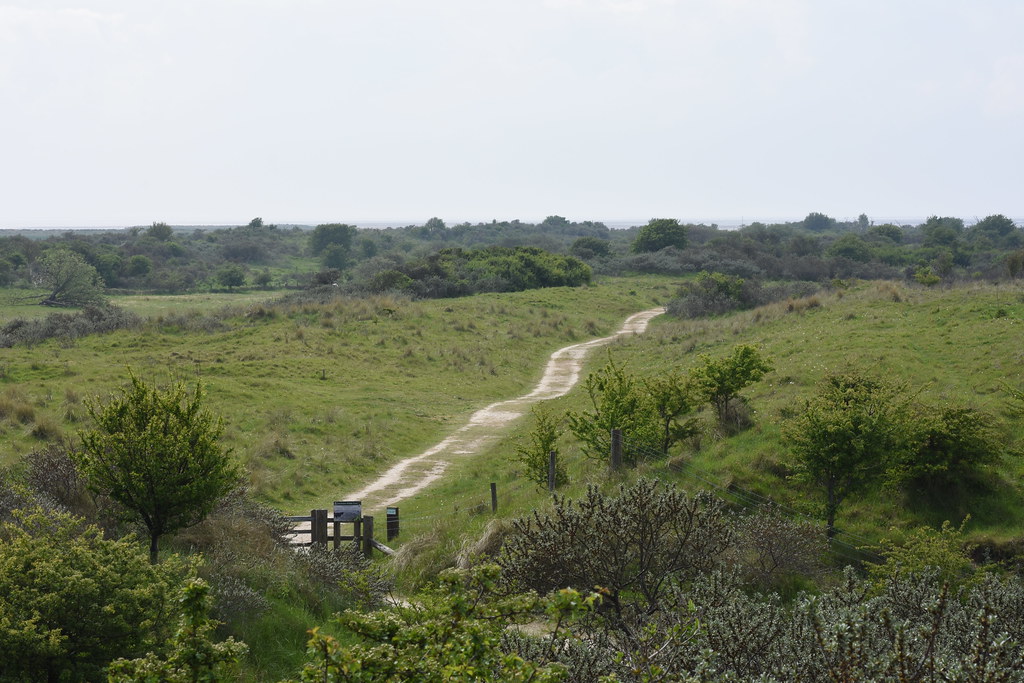
Link to Gibraltar Point NNR: Lincolnshire Wildlife Trust – Gibraltar Point
Biogeomorphology: Animals and Plants as Drivers of Geomorphic Change
This Cuchlaine King Symposium and accompanying ESP&L Special Issue will be dedicated to advancing contemporary biogeomorphological research.
The Symposium will centre on a small number of invited speakers whose work addresses key frontiers in the field, while submitted oral abstracts, presented throughout the congress, will extend and deepen these themes. A longer-than-normal poster session, combined with short ‘pop-up’ poster introductions, will further encourage exchange and collaboration among attendees.
The full Introduction to the Symposium and Special Issue can be downloaded here.
This is the first call for abstracts for the Symposium, and we are particularly keen to attract submissions from across geomorphology that engage with the following topics:
- Biogeomorphic Processes, Interactions, and Feedbacks
- Quantifying Biotic Contributions to Geomorphic Change
- Biogeomorphology Under Climate Change
- Biotic Change: Losses, Invasions, and Novel Assemblages
- Opportunities for Intervention: Reintroductions and Nature‑Based Solutions
Further specifics are available within the download. All accepted abstracts will be eligible to submit their papers to a special issue of Earth Surface Processes and Landforms. Authors who are unable to attend the Symposium but who would like to submit a paper to the special issue of ESPL are welcome to do so.
Mapping Your Future: Leadership, Interdisciplinary Working, and Networking for Early Career Geomorphologists
The COALESCE Project has been looking at barriers and enablers of movement between academia and industry for geomorphologists and has developed some activities to support early career researchers into leadership within the geomorphology community.
The COALESCE project team now invites early career geomorphologists to join them on Tuesday 1st September for a day of interactive sessions on leadership, building networks and connections, and interdisciplinary project work ahead of the main BSG conference in Lincoln.
This is for you if you are in the final year of your PhD, working as a postdoc, in your first lecturing post in academia, or working in your first or second professional role in industry.
There are 20 places available – these include funded travel and accommodation if required for the nights of 31st August and 1st September as well as refreshments on the day. Conference registration for the whole conference will also be covered.
Application is via an Expression of Interest form below with a deadline of Friday 17th July. We will let you know if you have a place by Friday 24th July.
Application Form — Event Flyer


If you are interested in hosting the BSG Annual Conference, we need hosts for 2027, 2028 and 2029 so please do get in touch! You can do so here.
Check out the highlights from previous conferences below:
The BSG Annual Conference is the most important event in the BSG calendar, bringing together geomorphology researchers and professionals to share their work and network with peers. This year the conference was held at the University of Leeds at Cloth Hall Court, in the city centre. It was hosted by the School of Geography, the River Basin Processes and Management research cluster and water@leeds.
This year was extra special as we celebrated the 50th anniversary of the journal Earth Surface Processes and Landforms, which has its origin at Leeds and for which there will be a special issue this year with the theme ‘50 years of changing geomorphological processes and landforms’.
We celebrated the BSG Medal and Award winners through keynote presentations, and hosted the third Cuchlaine King Symposium, supported by Earth Surface Processes and Landforms. The conference dinner was held at the fantastic Royal Armouries.
Please see the full report provided by Jonathan Carrivick below:
In September, the University of Leeds was delighted to welcome over 130 delegates in person and 5 online for the Annual Conference of the British Society for Geomorphology. The conference was held in central Leeds at Cloth Hall Court for convenience to those travelling and for the facilities within. Many people commented favourably about the food! The main conference proceedings began with workshops organised and facilitated by the BSG Postgraduate Forum and the BSG Committee for Professional Geomorphologists, before two and a half days of scientific sessions.
The seven oral sessions and 40 posters really showcased the incredible breadth and diversity of geomorphology, in terms of physical environments, research approaches, interdisciplinary links, and novel applications of emerging technologies and methods. Throughout the oral sessions we also had the opportunity to celebrate the 2025 BSG Medal and Award winners.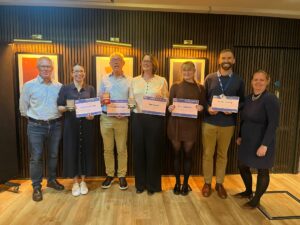 The conference featured the third Cuchlaine King Symposium, on the topic of ‘50 years of change in geomorphic systems’ with invited speakers highlighting the real-time pace of changes occurring in glaciated landscapes, and controls on the persistence and preservation of glacial activity in landscapes.
The Special Issue in Earth Surface Processes and Landforms associated with the Symposium remains open for submissions and we would like to encourage you to share your work here.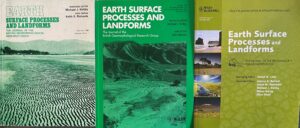 Alongside the scientific sessions, the BSG conference provided an excellent opportunity for networking and socialising amongst delegates bringing early career, established, professional and amateur geomorphologists together in a sociable setting. The Frost reception, supported by Wiley to celebrate the 50th anniversary of the journal Earth Surface Processes and Landforms, was held in Merchants Hall and 70 delegates enjoyed the Conference dinner and Awards ceremony held in The Royal Armouries. Other stand-out memories include the goody bag/merchandise, and the utterly engaging guided walk around central Leeds, the River Aire and the Flood Alleviation Scheme.
 The local organising committee in the School of Geography, University of Leeds, would like to thank all who attending the 2025 BSG Annual Conference. Presenting your work, networking, had an energised buzz and that made the conference highly successful!
~ Professor Jonathan Carrivick
Many thanks to the local organising committee:
Prof Jonathan Carrivick
Prof Joseph Holden
Dr Megan Klaar
Prof Mark Smith
Prof Duncan Quincey
In September 2024, Loughborough University welcomed over 120 delegates to its campus in the East Midlands (plus a further 20 online delegates) for the Annual Conference of the British Society for Geomorphology. Check out the highlights below!
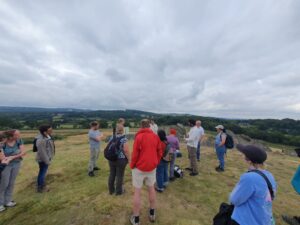
The conference began with a pre-conference field excursion to the Charnwood Forest Geopark, where over 25 delegates explored three key locations in this important area for UK geology: Morley Quarry, Beacon Hill and Bradgate Park. Despite a damp start, the weather improved as the excursion considered how geology shapes the modern landscape, searched for internationally famous Ediacran age fossils, and considered the critical aspects of geoconservation required to preserve these landscapes for future generations.
The main conference proceedings began with workshops organised and facilitated by the BSG Postgraduate Forum on navigating funding and fellowship applications and the BSG Committee for Professional Geomorphologists on Life as a Professional Geomorphologist, before two and a half days of scientific sessions. The seven oral sessions and > 40 posters showcased the breadth and diversity of geomorphology, from dryland and arid environments through to river restoration via tectonic geomorphology, sediment transport processes, glacial environments and novel applications of emerging technologies. Throughout the oral sessions we also had the opportunity to celebrate the 2024 BSG Medal and Award winners.
The conference featured the second Cuchlaine King Symposium, with invited speakers highlighting the importance of ‘Extreme Events in Geomorphology’ across multiple geomorphic domains including mountain landscapes, deserts, coasts, and on Mars. The Special Issue in Earth Surface Processes and Landforms associated with the Symposium remains open for submissions, and we would like to encourage you to share your work here.
Alongside the scientific sessions, the BSG conference provided an opportunity for networking and socialising amongst delegates with the Icebreaker drinks reception held in the Robert Allison Suite at Loughborough University stadium (named after former Vice-Chancellor at Loughborough and former Chair of the BSG) and the Conference dinner and Awards ceremony held in the delightful surroundings of Holywell Park. We were pleased to welcome special guest Prof Chris Linton, grandson of Prof David Linton, to present the Medals at the Awards ceremony.
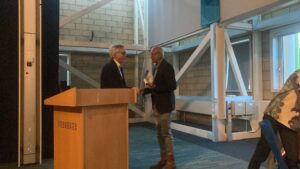
The 2022 BSG Annual Conference was held in Northumbria. Check out the highlights below and view a blog post from our Postgraduate Sub-Committe Chair Marina.
Pre-conference Fieldtrip:
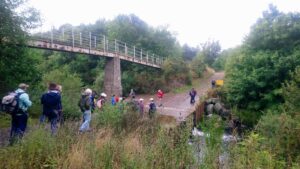
The pre-conference fieldtrip took place on Sunday 4th September. Participants headed to a series of remote Northumberland sites of geomorphological interest, with a primary focus on sites that were part of active or planned river restoration projects, and/or where river channels and their floodplains have been subject to recent extreme geomorphological perturbations linked to historical intervention. The trip was led by professional geomorphologists from the Environment Agency.
Postgraduate Workshop – Grants, Geomorph Jobs and Beyond:

The postgraduate workshop provided a forum to discuss and plan an individuals future in Geomorphology. The workshop discussed all things grants and funding related with a great panel of academics.
Professional Workshop – To Model or Not to Model:

The professional workshop held a discussion around the benefits and disadvantages of modelling of applied geomorphological projects.
Conference presentations and talks:

The conference took place from Monday afternoon to Wednesday afternoon, covering a wide range of topics including fluvial, glacial, coastal, desert and planetary geomorphology.
Poster Presentation and Networking Event:
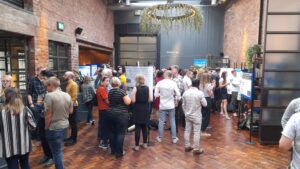
On the Tuesday evening a networking event was held in the impressive Wylam Brewery, set in the beautiful grounds of Exhibition Park. A wide variety of posters were presented covering the latest research in the field of geomorphology as well as practical case studies from the applied/professional geomorphology attendees.
Feedback from attendees:
‘I would like to point out the amazing British geomorphology community that attended the event. From industries, professors, to Phd students, the friendship and network that I created during the event was unique. I will definitely attend the next events.’ (Gustavo Nagel, Southampton University)
‘The BSG 2022 Conference fieldtrip was a fantastic opportunity to see applied geomorphology in action. We visited two upland river sites which have been historically modified and are the focus of planned river restoration activities. It was great to hear and discuss river science, options and challenges for restoraiton in the field with a diverse group of practitioners and researchers. The trip highlighted the importance of linking research with practice on the ground. I enjoyed the trip and would recommend any one with an interest in geomorphology to join future BSG fieldtrips’ (Hannah Joyce, River Restoration Centre)